Sometimes as an editor, my role is to trim words. For instance, shortening “they reached the conclusion that” to the more succinct “they concluded…” This week, my focus was pulled toward another type of trimming—not words, but actual clay. I’ve been taking a pottery class this month, and we’ve gotten to the stage called trimming. Much like editing words, trimming clay is the step that comes after the first draft. The mug, bowl, plate, vase, etc. has been formed and set aside to dry. It’s mostly formed; we can see what the artist was going for, even as we can see that it is not quite finished yet.
Once the clay item is ready to be handled with fresh eyes and hands, you can re-center the piece on the wheel, secure it to the base, and get out your trimming tools to give the clay piece a nice finish. This step includes cleaning up scraggly or uneven parts and smoothing over any unwanted smudges with a bit of water.

The trimming process has some of the same uncertainty, discernment, and skill of the formation stage. Paying attention to the clay, running your hands over it, gently feeling for consistent thickness, and smoothing out the rough ridges. There’s a peacefulness and sense of accomplishment in seeing that clunky, thick clay around the edges get whittled off, leaving behind a perfectly smooth bowl ready for the kiln.
As I finished trimming my final pieces of formed clay to be something near an actual bowl or mug, ready for the next part of its journey, it clicked that I’d had a similar sense of quiet attention, hope, and pride this week upon finishing a big copyediting project. I’d trimmed the excess words and flagged inconsistencies. I’d smoothed out rough edges in the book and prepared it for the next step in its publishing journey.
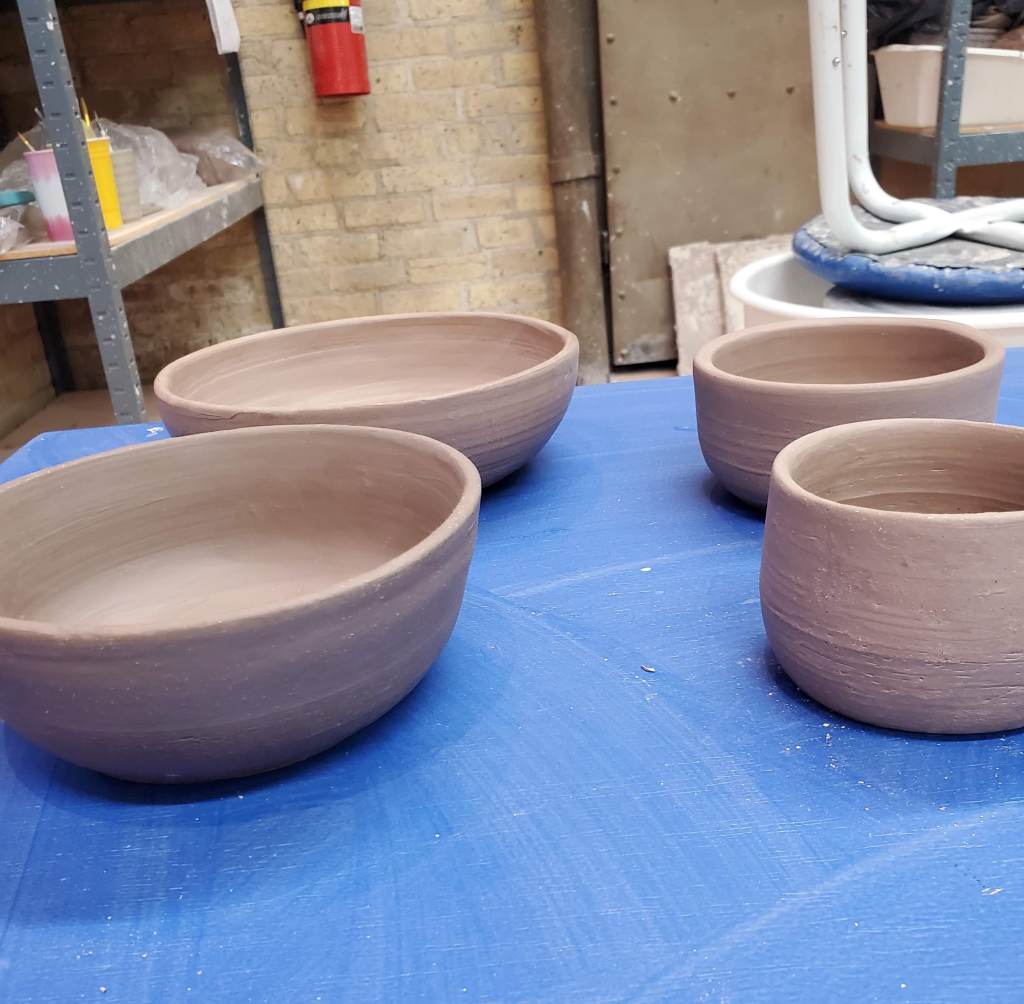
And for both, I find myself thinking: what comes next? For pottery, I quizzed the instructor on each of the upcoming stages. And for the self-published writing, I referred to Jane Friedman’s checklist: https://janefriedman.com/self-publishing-checklist/. In her checklist, she breaks down each stage in the self-publishing process so writers can plan how to move forward as they work through the editing, design, and proofing stages of a book.
Whether the project is clay-based or word-based, it is helpful to set it aside for a bit and return later with a fresh perspective. If you’re considering a copyedit for that part of the process, you can read more about the different types of “trimming” that I do by visiting my Services page.
 Natalie Roth Editing Services