Don’t Mind the Mess, or Do

Calm blue water, tall grasses, and pretty bird calls surround me on a somewhat muddy trail I have nearly all to myself. It’s late afternoon and I’m exploring the path of an unassuming wetlands preserve nestled within the city. I see several red-winged blackbirds jumping around the tall grasses, and a great blue heron soaring above the water. The experience feels like a slow, warm breeze in a month full of gusty, loud wind. That I’d found such a spot without a long trek into the countryside makes it feel even more like a secret adventure, even if photos of my little oasis give away that I am merely a ten minutes’ walk from a traffic light.

Wetlands Walk, April 2024, photo by Natalie Roth

After a few more contemplative breaths and careful steps, I find my way back to the entrance of the park. Just in time—a group of preteens with toy water guns are about to enter the trail for their own adventure. I can guess which of the two sections of trail they will have to be careful in navigating, and which they will quickly run through (pictured below).

I’m used to navigating misplaced words, not misplaced paths! Two sections of the same trail, perhaps at different stages of completion. Photos by Natalie Roth

Walking the contrasting segments of trail in the wetlands preserve reminded me of the two types of editing I do, copyediting and proofreading. The first path is messier, trickier; I have to slow down and pay closer attention to where I put my feet or I’ll get muddy. A manuscript with the essence of the top photo may be similarly “muddy” and less stable. It needs to be navigated slowly and thus by a copyedit. Copyediting is an earlier stage of the editing process with texts that need more care and attention. This is where typos, grammar issues, and flow get addressed so that the edited result is one that a reader can more easily understand and navigate. I wouldn’t run through this path or text as is, and neither would a reader.

Proofreading, meanwhile, is taking on a text more similar to the path in the bottom photo. This path isn’t muddy or haphazard, and I can even run alongside if I want. This is like a text that is already orderly and relatively easy to navigate. A reader can breeze through with only a few snags or bumps. Proofreading is the stage that checks for missing words, minor typos that missed the first round, and perhaps an extra comma to give it that finishing touch.

Both paths are part of the editing adventure that leads to that calm blue oasis—which stage are you ready to navigate?

Is your writing project looking more like the top photo or the bottom? Read more about the phases of editing on my Services page.
Weighing Your Words

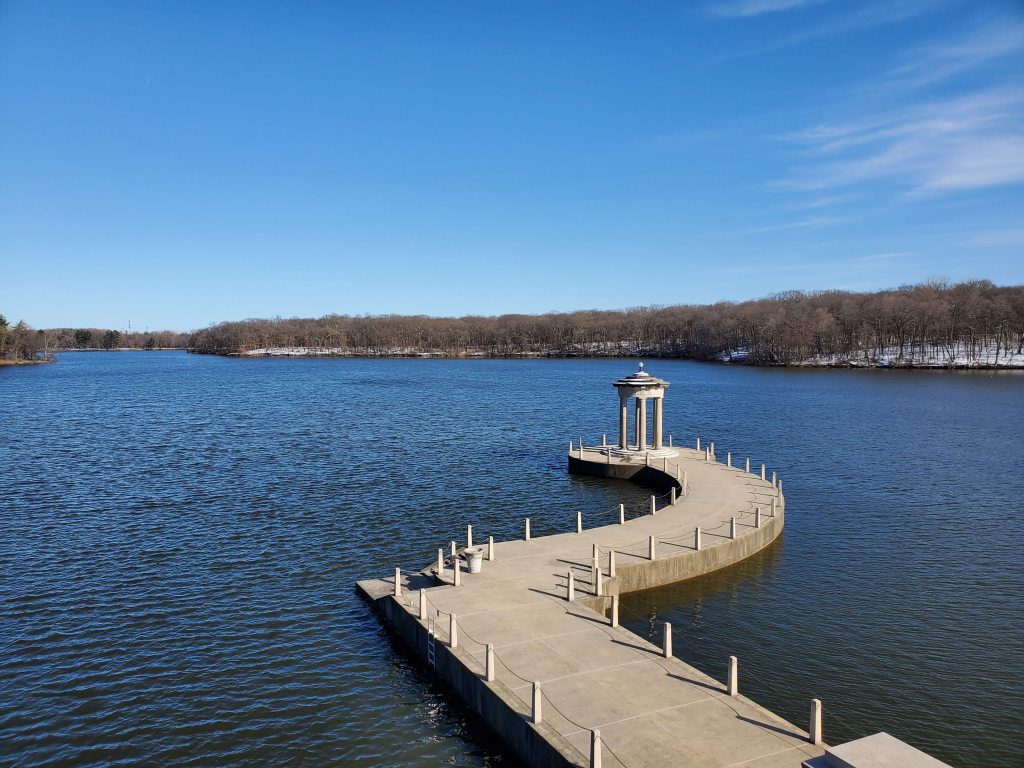
Blue skies over a calm blue lake with a white concrete path pier cutting through the water and leading to a gazebo at end of pier
Take a clear path to your message with precise word choices. Photo by Natalie Roth

When’s the last time you looked up a word in the dictionary? I look up words all the time when I copyedit. Often I want to check if something is one word or two (the trifecta of health care, childcare, and day care springs to mind—spellings may vary), but sometimes I also want to check the meaning of a term and make sure it’s been used properly.

My latest copyediting project was peppered with words that I don’t stumble on in my daily life. My favorite was sequela, plural sequelae. It means a secondary result. A sequela of taking on this editing project was learning words like sequela! And since I looked it up on Merriam-Webster online, a concomitant piece of information was the audio pronunciation, which makes it even easier to incorporate sequela into my lexicon and casually use it in a conversation if I wish. 

I ended up writing down a few more words that captured my imagination in this project, words like concomitant (accompanying), opprobrium (contempt), and diaphoretic (perspiring profusely). These words made the day seem brighter: They let me peek into the author’s perspective on the world through how they chose to describe it. They were also a reminder of the depth and breadth of vocabulary words out there just waiting to help someone precisely express their ideas. 

How do you find more precise words for your own writing? If you get diaphoretic at the thought of finding the exact word to describe what you are trying to say, one handy word resource beyond the dictionary or ordinary thesaurus is WordHippo. This free website is a fully stocked synonym generator. For example, if I look up the word sequela, it starts me off with over thirty synonyms. WordHippo also has antonyms, rhyming words, and sample sentences to help writers choose their words with confidence.

Words help you get across your message, and thoughtful word choices strengthen that message. Have you stumbled on any words that spark your imagination lately? Share them with me on my Contact page.

A Simple Little System

Having an idea is a great start, but can it withstand some scrutiny? Fact-checking is an important step in supporting the legitimacy of a project.

This week I rewatched the film Bells Are Ringing, a 1960 musical comedy with Judy Holliday and Dean Martin. Alongside some playful songs, the writers slipped in a message about the importance of fact-checking. You see, switchboard operator Judy Holliday is unwittingly relaying phone orders for a betting syndicate. The ringleader created a “simple little system” that disguises horse tracks as classical music composers and horses as symphonies. So instead of betting $500 on the third horse to win a race at Belmont Park, the bettor calls up Judy to place an order for 500 albums of Beethoven’s third symphony, and she passes along that information to the supposed music warehouse. (The full explanation can be found in this musical number.)

Viola laying on top of a page of Beethoven sheet music
Beethoven (not Belmont Park) symphony sheet music, ready to be played. Photo by Natalie Roth

But the system can’t weather the scrutiny of anyone with some basic knowledge of classical music. The ringleader gets very flustered when a young grocer’s assistant with an interest in the record company poses a few questions. And the whole operation falls apart because of this young man’s musical knowledge. He happens to be delivering groceries when Judy takes an order for Beethoven’s tenth symphony. He comments that it must be a mistake, that Beethoven only has nine symphonies. (Read more about the “Curse of the Ninth” here.) And so, Judy changes all the orders that day from Beethoven’s tenth to Beethoven’s ninth to match the factsand the ringleader’s simple little system falls completely apart.

This sequence of events is a great lesson in how ideas need to be able to pass scrutiny with the audience. The system was based on lies and a little fact-check poked a big hole in the whole scheme.

I did plenty of fact-checking this week for a fiction manuscript that happened to have multiple music references. All the songs did indeed exist and, once they checked out, they made it onto the style sheet. This is the “simple little system” editors use to track any proper nouns, style decisions, plot points, and characters in one document to ensure consistency. It’s how I caught that a character was given two different last names; it also helped catch a spot where the timeline wasn’t adding up. By the end, my style sheet included a whole soundtrack of songs to accompany the book, and I could report back that the factual details would hold up to reader scrutiny.

Looking for fact-checking and careful attention to the ideas in your story? An editor can help with that! Review the basic categories of editing on my Services page.

What’s on Your Soundtrack?

I worked from a café recently, and as I sat there editing and sipping my drink, my attention drifted in and out of what song was being piped through the speakers. I paused for a moment when the theme song of Xanadu started playing. My mind flashed to the memory of a few months back, when I’d gone to see a rerun of the film with a friend. Several people had shown up to the theater in full costume, complete with roller skates. We’d gone for a slice of pizza after the show, chatting about the film and about life before I had to catch the last bus home.

Having a musical Proustian moment. Photo by Natalie Roth

The next song to grab my attention was “I Love the Nightlife (Disco Round)” by Alicia Bridges. They used to play this song on a TV infomercial when I was in high school. The producers had paired song clips from the 1970s with cheesy commentary to lure nostalgic viewers to buy a box of CDs. With nothing else on—life without cable and this was pre-streaming—it was the default background noise for those lazy nights when it wasn’t quite time for bed. It was on often enough that my sister and I knew all the songs before long. I never bought the box set, but many of those songs transport me back to those nights hanging out with my sister.

It may have been the caffeine kicking in, but the familiarity of these songs stirred me up. I glanced around at the other people in the room and thought, We all know these songs; they are songs that have played on the radio longer than I’ve been alive. They connect us, yet they also just fade into the background. Maybe this song played at that woman’s first dance. Maybe it was blaring from the speakers at the start of the marathon that guy ran. Maybe it plays overhead every twentieth time that person goes to the grocery store. Innocuous, happy, bittersweet…any number of emotions or memories could be attached to different songs for different people. We’re all brimming with stories, and music can be the soundtrack to those stories.

As Chaka Khan’s “I’m Every Woman” started playing, I noticed the spaced-out stare of another diner sharing the same song but thinking her own thoughts and recalling her own memories. It felt fitting to sit there, wondering what she might be thinking, and to hear Chaka sing, “I can read your thoughts right now / Every one from A to Z.”

Music is a big part of my life, with certain moments and memories frozen in different songs. What songs are in your life’s soundtrack? Check out this list of novels that feature music. Or write your own! Learn more about how I can help by visiting my Services page.

The Big Dipper, or Is It the Plough?

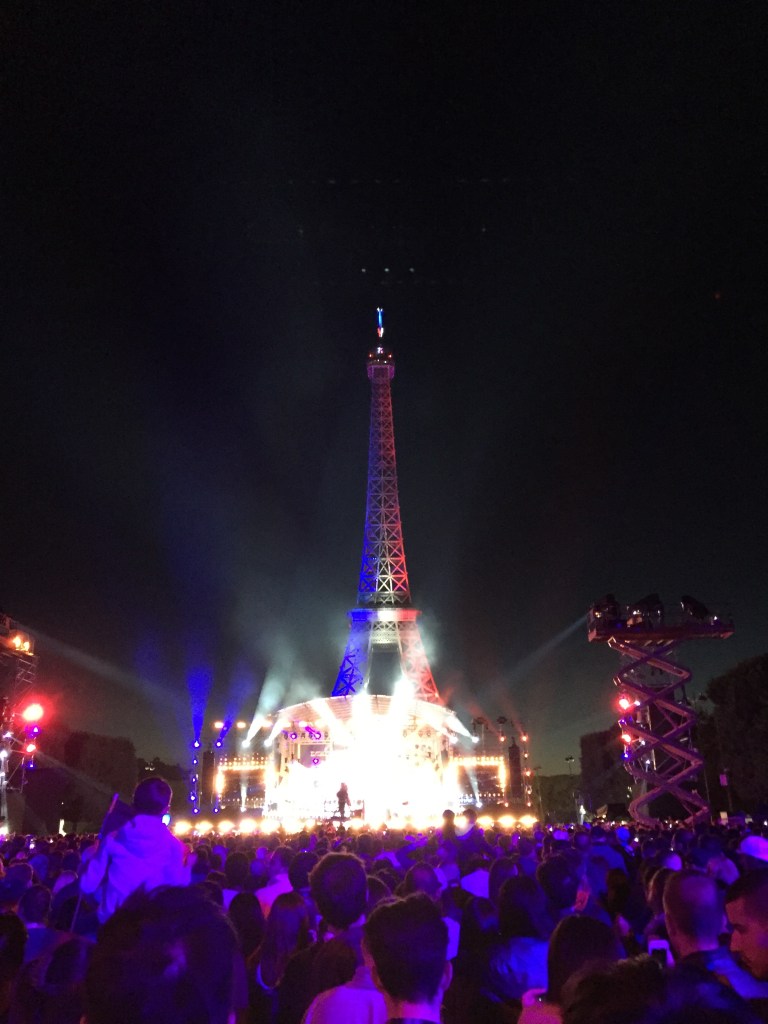
A few days ago was Bastille Day, what my brain’s shorthand considers the French equivalent of our July 4th. Each year now, the date takes me back to the year I celebrated Bastille Day in Paris with a picnic and fireworks. These fireworks were memorable because I got to watch them from the lawn in front of the Eiffel Tower.  

Eiffel Tower lit up at nighttime with the colors of the French flag (blue, white, red) and a crowd of people in front to celebrate Bastille Day.
Eiffel Tower lit up for Bastille Day concert and fireworks display in 2016. Photo by Natalie Roth

As the fireworks brightened the sky and then faded out over this iconic monument, another light display gradually took its spot next to the Eiffel Tower as well: the Big Dipper. It’s one of the easiest constellations to spot and here it was, ready to be spotted. Yet some people don’t know it as the Big Dipper. If they grew up in the UK, they may call it the Plough. Others link this set of stars to Ursa Major, the Great Bear, or maybe they prefer the name Drinking Gourd.

My role as an editor is to track which term an author uses and check for consistency. The term they choose can be significant. I worked on a history book project that highlighted how the “Drinking Gourd” pointed to the North Star and thus helped enslaved people navigate their journeys northward and out of enslavement. The National Park Service’s website was one of my go-tos for checking U.S. history facts from writers I worked with. Meanwhile, using the term Ursa Major, the Great Bear, would link the collection of stars to many different oral storytelling traditions and mythologies across the globe.

This constellation contains and inspires a breadth of stories for people to hear or read about and learn something new. Whenever I spot the Big Dipper in the sky, I remember the stories it has been linked to over the years, including my story of seeing it grace the sky next to the Eiffel Tower. 

Looking for a thoughtful eye to look over the story you want to tell? Check out the editorial services on my Services page.