
Weighing Your Words

Blue skies over a calm blue lake with a white concrete path pier cutting through the water and leading to a gazebo at end of pier
Take a clear path to your message with precise word choices. Photo by Natalie Roth

When’s the last time you looked up a word in the dictionary? I look up words all the time when I copyedit. Often I want to check if something is one word or two (the trifecta of health care, childcare, and day care springs to mind—spellings may vary), but sometimes I also want to check the meaning of a term and make sure it’s been used properly.

My latest copyediting project was peppered with words that I don’t stumble on in my daily life. My favorite was sequela, plural sequelae. It means a secondary result. A sequela of taking on this editing project was learning words like sequela! And since I looked it up on Merriam-Webster online, a concomitant piece of information was the audio pronunciation, which makes it even easier to incorporate sequela into my lexicon and casually use it in a conversation if I wish. 

I ended up writing down a few more words that captured my imagination in this project, words like concomitant (accompanying), opprobrium (contempt), and diaphoretic (perspiring profusely). These words made the day seem brighter: They let me peek into the author’s perspective on the world through how they chose to describe it. They were also a reminder of the depth and breadth of vocabulary words out there just waiting to help someone precisely express their ideas. 

How do you find more precise words for your own writing? If you get diaphoretic at the thought of finding the exact word to describe what you are trying to say, one handy word resource beyond the dictionary or ordinary thesaurus is WordHippo. This free website is a fully stocked synonym generator. For example, if I look up the word sequela, it starts me off with over thirty synonyms. WordHippo also has antonyms, rhyming words, and sample sentences to help writers choose their words with confidence.

Words help you get across your message, and thoughtful word choices strengthen that message. Have you stumbled on any words that spark your imagination lately? Share them with me on my Contact page.

New Year, New Tools

white concrete bridge walkway with metal railing is set in the middle of a wintertime forest
Following the path of a new year and seeing where it leads… Photo by Natalie Roth

Today is a day for promises, resolutions, goals, and all that jazz. It is part of the trope of New Year’s Day that these resolves don’t last for very long. Maybe not through the month or even through the week. I wanted to share two basic tools that I’ll be using this month as I think about my goals for the year:

Notice and Manage Productivity with Bullet Journaling

A few years ago, a friend excitedly told me about how she started “bullet journaling” and it revolutionized her to-do lists and goal setting in terms of accountability and mindfulness. It is a free method of organization by using coded bullet points to track what you get done and to be more thoughtful as you move through the month and year. It is a simple “analog” tool (just a notebook and pen) to organize your thoughts and goals for the year. Also, if you search bullet journaling in your favorite podcast source, you may find some enlightening interviews and tips on getting started (yes, I listened to a few to refresh myself on the concept).

Read More Books or Listen to More Audiobooks with Libby (and other apps)

Libby has been a great tool for meeting my reading goals and learning about whatever topic I’ve been interested in lately. It is a free app where you type in your library card number and gain greater access to free ebooks and audiobooks, which makes it easy to read on the go. Pro-tip: speed through that nonfiction audiobook you’ve been sloughing through by increasing the reading speed. I don’t notice 1.2x speed (or even 1.5x) but I can absorb the information more quickly. You can check your local library for what other apps they have for books, magazines, and other media 🙂

Thanks for reading and I wish you moments of joy, curiosity, peace, and growth for your today and tomorrow(s).

Have you tried out these or similar tools? Tell me about it using my Contact page.

“Please Mr. Postman”

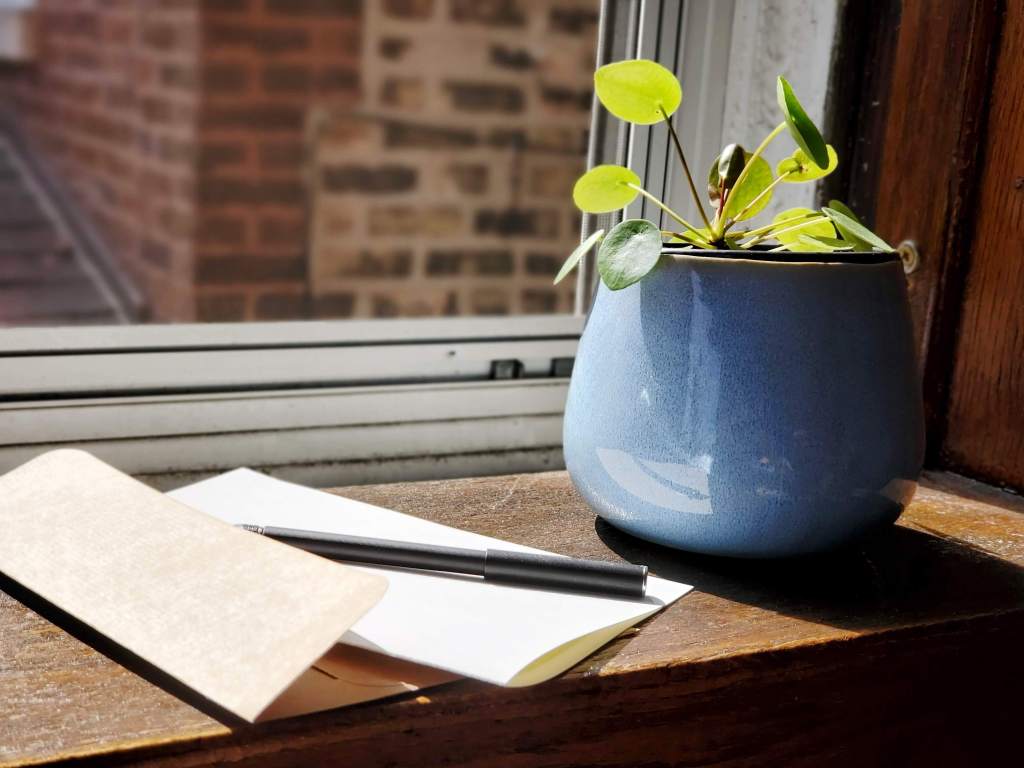
Photo of a blank card next to a sunny window sill, with a pen ready to write.

Please Mister Postman, look and see

Is there a letter, a letter for me.

I sang along to this and other Motown songs when I was younger, and I still get caught up in the catchy tune. But this week, when an article I edited used the word “postman,” I paused on the word. Language has changed since the Marvelettes first sang the tune in 1961. Some might say the term is old-fashioned, that it should be “mailman.” Others might point out that postal workers aren’t just men anymore, and the term should be a gender-neutral term such as “letter carrier.” The latter is in line with the latest APA Style Guidelines for bias-free language, which advocates for choosing language that is inclusive and respectful. You can see their entry on avoiding gendered occupational titles here.

As an editor, I have the opportunity to spot problematic language and check in with the writer about their intent. Does a certain word choice unnecessarily exclude people or introduce bias? Does the phrasing come across as disrespectful; was that the intent? I try to thoughtfully consider the language that I find on the page, and it’s an ongoing process.

This past week I added to my awareness by attending an ACES editing webinar on potentially problematic language. Some of the examples were good reminders of things I’d heard before about considering wording used around race, gender, and mental health. For instance, saying someone “suffers from depression” is biased compared to simply stating that they “have depression.” Another piece of advice was to consider the language that advocacy groups recommend and to think through the pros and cons for choosing terms when there’s no consensus. Ask: Is this word choice perpetuating a harmful stereotype? Is it respectful to readers? The editing stage is the perfect time to catch and consider these moments so that the writing fits the intent.

Whether it’s a handwritten letter from a loved one or the latest novel from your favorite author, words connect us to ideas and feelings. Yet language is changing all the time, so it’s a good idea to think about what ideas and feelings underlie particular word choices. Conscious language guides from advocacy groups and editing associations are great tools to keep up with language trends. Some of these guides are helpfully compiled by editor and authenticity reader Crystal Shelley here.

Looking for an editor to bounce ideas off of and thoughtfully provide feedback on the language in your writing? Send me a message on my Contact page.